
Educating with respect and beauty
Waldorf pedagogy inspires the way we accompany children: respecting the rhythm of each stage, caring for the environment, and trusting play as the engine of learning.
What is Waldorf pedagogy?
Waldorf pedagogy is an educational approach that accompanies a child's development while respecting the rhythms of each stage. In the earliest years it focuses on free play, imitation, nature and a warm, predictable environment, rather than on early academic learning.
Learning with the whole body
Waldorf pedagogy understands that, in the earliest years, a child doesn’t learn by listening to explanations, but by living and imitating what surrounds them. That’s why we take such care with the environment, the gestures and the atmosphere: everything around the child is, in fact, their first teacher.
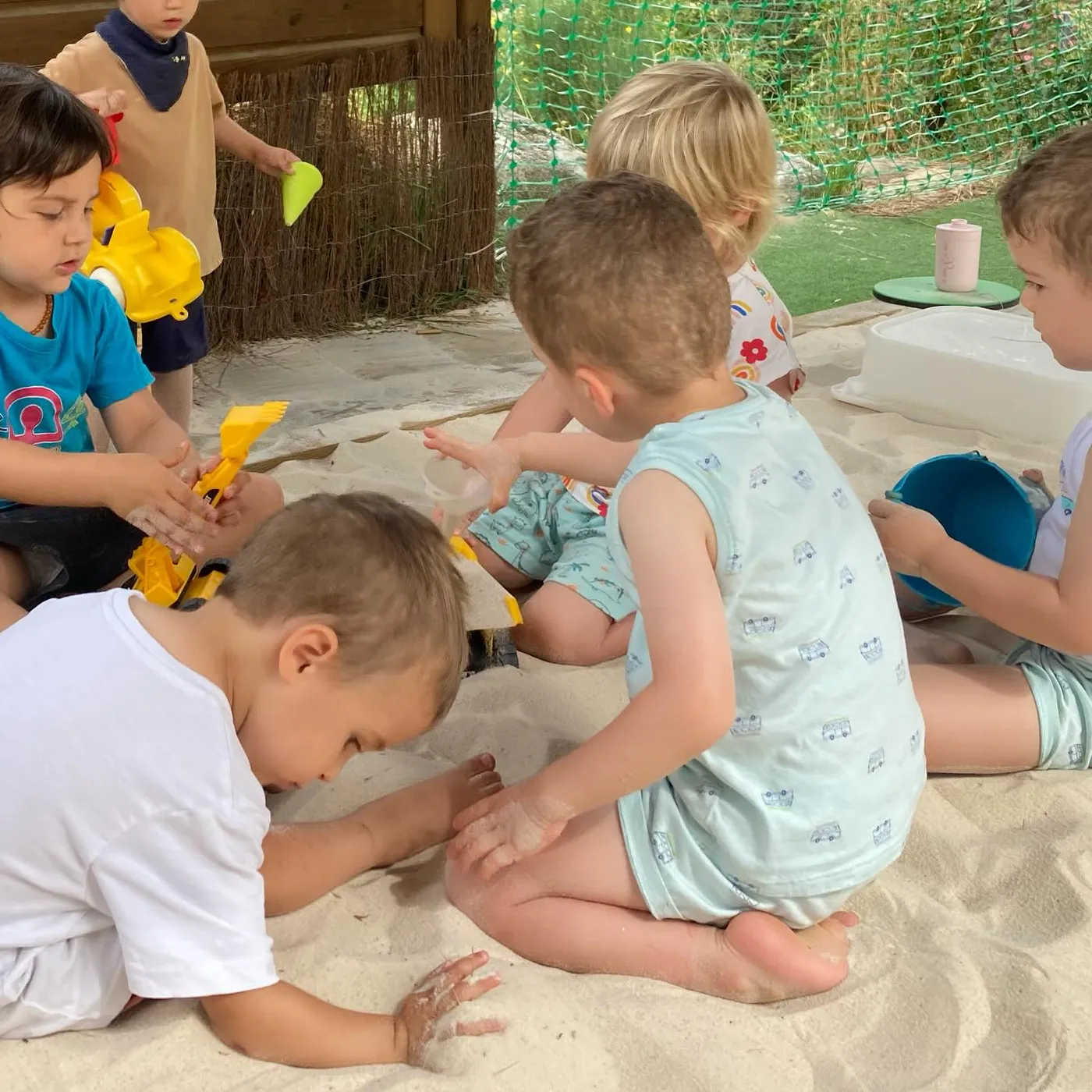
Free play sits at the centre of the day. Through play, children explore, solve, imagine and make sense of the world. Our job is not to direct that play, but to offer the time, the space and the materials for it to flourish.
The repetition that holds
The day, the week and the seasons follow a recognisable rhythm. This predictability gives the little ones security and lets them anticipate, relax and trust.
How the rhythm plays out daily →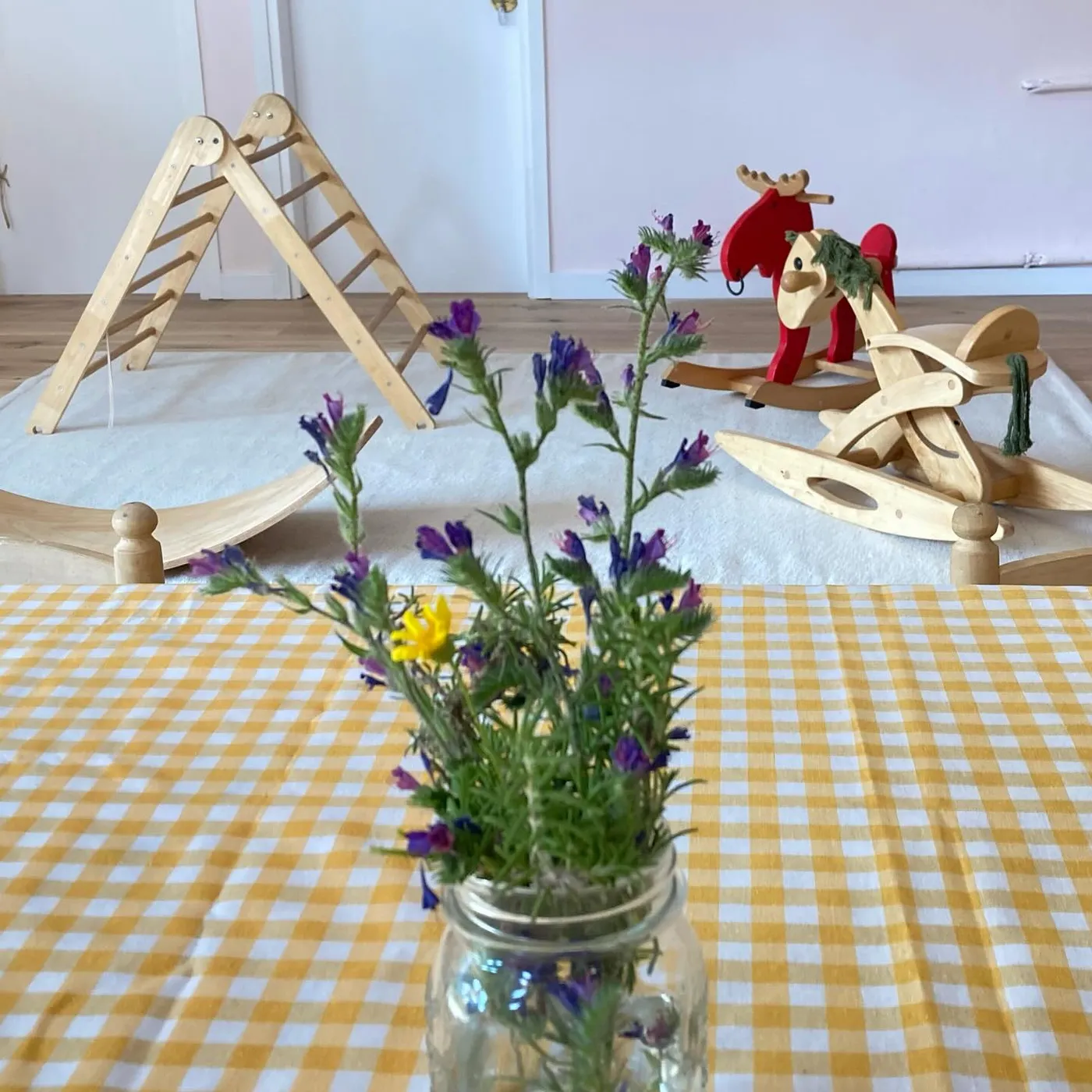
Nature and natural materials
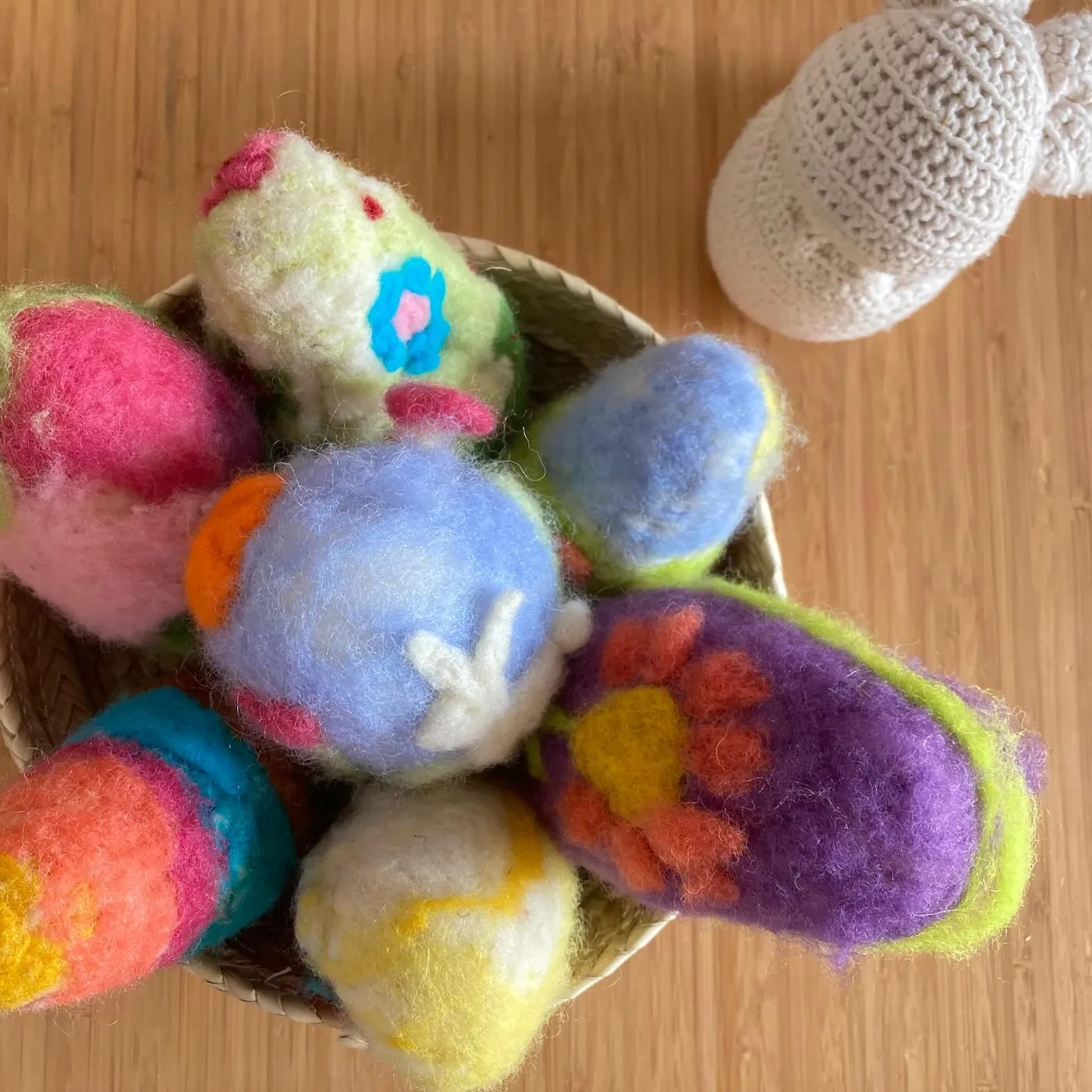
Wood, wool, sand, water... Natural materials that awaken the senses and invite open-ended play, without instructions, where imagination sets the rules.
The pillars of each day
- Rhythm and repetitiona predictable day that brings security
- Free playthe engine of learning
- Natural materialswood, wool and elements from nature
- Imitation and examplethe adult as a close role model
- Contact with naturedaily outings in the open air
- Screen-freelive songs and stories
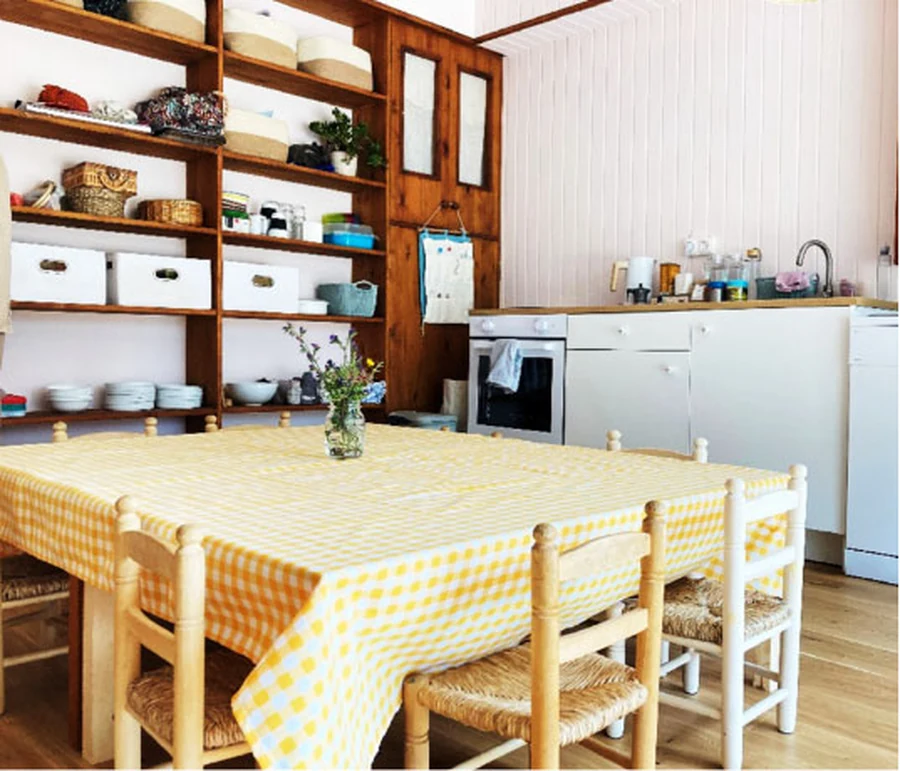
In the earliest years, a child learns the world by imitating it and playing with it.
About Waldorf pedagogy
Is Waldorf pedagogy religious?
No. Waldorf pedagogy is an educational approach, not a religion. It is based on respect for a child's development and welcomes families of any belief or background.
Do children learn to read and write later?
In the 0–3 stage the focus is play, movement and connection, not academic learning. Reading and writing are introduced later, when the child is truly ready.
Why are there no screens?
In the earliest years, a child needs real, sensory experiences. That's why we offer live songs and stories, nature and free play, rather than screens or recorded music.
Would you like to know more?
We'd be glad to explain how we bring this approach into the daily life of the house.
Get in touch